

In the real estate industry, income is never a simple fixed number. Every year, thousands of new real estate agents enter the field hoping to make money, but only a small portion truly understand how real estate agent salaries hold up. The truth is simple: A real estate agent Salary depends on skill, stability and ability to adapt in a competitive market. When you understand the deep dynamics behind revenue growth, you not only survive, but thrive. Whether you’re a beginner trying to build a career or an agent looking to scale up, learning the top earning factors can significantly increase your real estate salary in the first few years.
A real estate agent’s journey is shaped by many elements – market movements, negotiation experience, personal branding and the ability to find clients. While the industry is full of opportunities, the agents who take the time to understand these key factors are the ones who see their income grow faster than the rest. This detailed guide breaks down the five most important factors that directly affect real estate salaries, as well as insights to help you grow strategically and sustainably.
1. Experience Level and Long Term Impact on Real Estate Agent Salary
Experience has always been one of the most reliable predictors of income in real estate. When agents start out, they often struggle with slow months, unpredictable deal flow and limited industry knowledge. But as the months turn into years, skills improve dramatically. Agents learn to negotiate confidently, handle paperwork efficiently, and handle objections with ease. This gradual change has a direct impact on the increase in real estate agent salaries.
The biggest advantage of experience is knowledge of customer psychology. Knowing how to guide buyers and sellers during emotional or complex decisions makes transactions easier. Over time, agents also develop a powerful network – contractors, lenders, photographers, lawyers and other local professionals. This network not only increases productivity but also improves the reputation of the agent. An agent with good contacts is trusted, and trust leads to more deals. These accumulated skills lead to long-term increases in real estate salaries.
Experience also helps agents navigate different commission structure options with confidence. New agents generally accept whatever model is offered by their brokerage, while experienced agents consider which split benefits them the most. It is important to understand these financial models, as choosing the right commission structure can significantly increase your income without adding any extra work. With each year’s experience, the ability to close deals quickly, handle several clients at once and deliver strong results contributes to creating a high and stable real estate broker’s salary.
2. How Market Conditions and Real Estate Market Trends Influence Earnings
No industry is as affected by economic movements and changes in demand as real estate. Property values rise, fall, adjust and stabilize based on countless factors – interest rates, political decisions, population changes and economic cycles. These market forces directly affect agents’ earnings and opportunities to grow their business. When trends in the real estate market show high demand for buyers, prices rise, inventory increases rapidly and transactions increase. This leads to a significant bump in estate agent salaries as more deals and higher prices lead to higher commissions.
Even in slow markets, smart agents study trends in the real estate market to reposition themselves. They have gone from focusing exclusively on residential sales to rentals, commercial deals or distressed properties. Adaptability is one of the strongest markers of a successful agent. Instead of waiting for the market to improve, top agents are adjusting their strategies and continuing to close deals. This flexibility ensures that real estate salaries remain strong even during economic downturns.
Market knowledge also increases customer confidence. Buyers and sellers rely on agents to help them make safe and profitable decisions. When an agent explains price trends, neighborhood growth or investment potential with confidence, a client is more likely to commit. This increased trust leads to smoother closings and direct referrals, both of which bolster long-term real estate agent earnings.
3. Earning Power and The Role of Commission Models
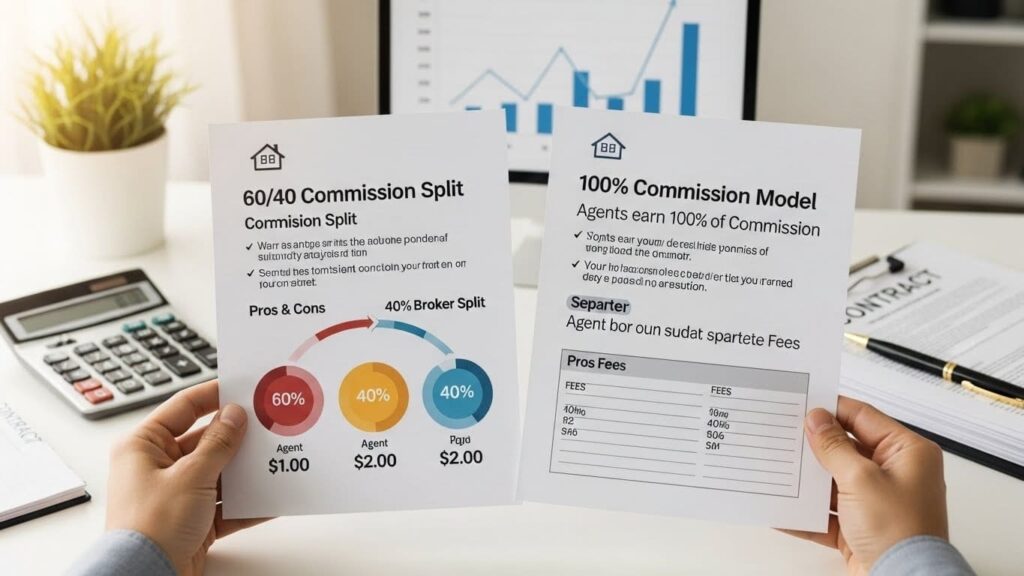
Unlike traditional jobs where the income is fixed, real estate income depends on the commission percentage earned per deal. This is where the composition of the commission becomes a powerful factor. Some brokerages offer a standard split where the agent gets a portion while the brokerage takes the rest. Others offer generous shares but require a monthly desktop fee or marketing contribution. Some brokerages allow agents to keep 100% of the commission, but charge a flat fee per transaction. Choosing the right commission structure can dramatically increase your total annual income.
For example, an agent who closes a lot of high-value deals may prefer a higher income model for homes, even though additional fees apply. Meanwhile, a newbie can benefit from a supportive environment where training and leadership are provided. Understanding these differences can help brokers maximize their real estate commissions without having to work harder—just smarter.
Commission models also affect an agent’s motivation. When agents know that closing more deals directly increases their income, they stay motivated and consistent. This results in improved customer management, better conversion rates and more trusting interactions. Over the years, the cumulative effect of choosing the right commission model and honing personal strategies has made real estate salaries quite strong overall.
4. Lead Generation Skills and Strong Client Acquisition Strategies Boost Earnings Quickly
Lead generation is at the heart of real estate success. Even the most experienced and talented agent cannot make money without clients. That is why effective customer acquisition strategies are one of the most important factors behind a strong real estate agent salary. Agents use a variety of methods to attract clients – online marketing, social media presence, referral networks, open houses, local advertising and content creation. The more consistently an agent generates leads, the more stable his income will be.
One of the biggest benefits of mastering professional customer acquisition strategies is predictability. Instead of relying on random chance, agents create systems that bring in leads every week. This creates a reliable pipeline of buyers and sellers, ensuring deals never end. Generating high-level leads also builds brand identity. When people see your name, ads or content repeatedly, they remember you when making real estate decisions. This constant visibility increases the Real Estate Agent salary as it leads to more deals throughout the year.
Agents who excel at lead generation often earn far more than those with years of experience but no marketing strategy. Consistency in outreach, communication and follow-up builds lasting relationships, and relationships give lifelong customers. Over time, these customers recommend you to family, friends and colleagues. This cycle of word of mouth increases your real estate agent salary exponentially year after year.
5. Personal Branding and Trust as a Long Term Income Driver
In the modern real estate industry, an agent’s brand is their most powerful asset. People like to work with agents who seem safe, reliable and knowledgeable. Personal branding includes everything from your social media presence and marketing materials to your communication style and professionalism. When customers trust you, they are more willing to commit, negotiate and complete the deal. This directly increases real estate agent wages because trust increases the speed of the decision-making process.
A strong brand also positions you as a local expert. Clients want someone who knows the neighborhoods, schools, growth areas and investment prospects. Agents who present themselves as experts naturally attract exclusive clients and luxury listings. These high-value transactions significantly increase a Real Estate Agent salary because the commission from one luxury sale can be equal to five regular sales.
Another benefit of branding is long-term loyalty. When you maintain a visible, polished image online and offline, past customers keep coming back for future deals. They also recommend you to others, creating a long-term revenue engine that grows every year. Personal branding is not optional – it is essential for any broker who wants to earn a higher real estate salary and become a well-known professional in the market.
Conclusion
The real estate industry rewards those who understand its dynamics and implement smart strategies. Increasing your real estate salary isn’t about luck – it’s about experience, market understanding, commission options, strategic branding and strong lead generation. When you combine these factors, your income grows naturally and steadily. By studying trends in the real estate market, choosing the right commission structure and mastering effective customer acquisition strategies, you set yourself up for long-term success. Focus on growth, stability and trust building, and your real estate agent salary will increase steadily year after year.